It’s taken plenty of time and money to find the best substrate or enclosure material/bedding for our Russian tortoises. There are lots of options, and determining the best ones are a personal preference. Here is what I’ve used, like and dislike, and why.
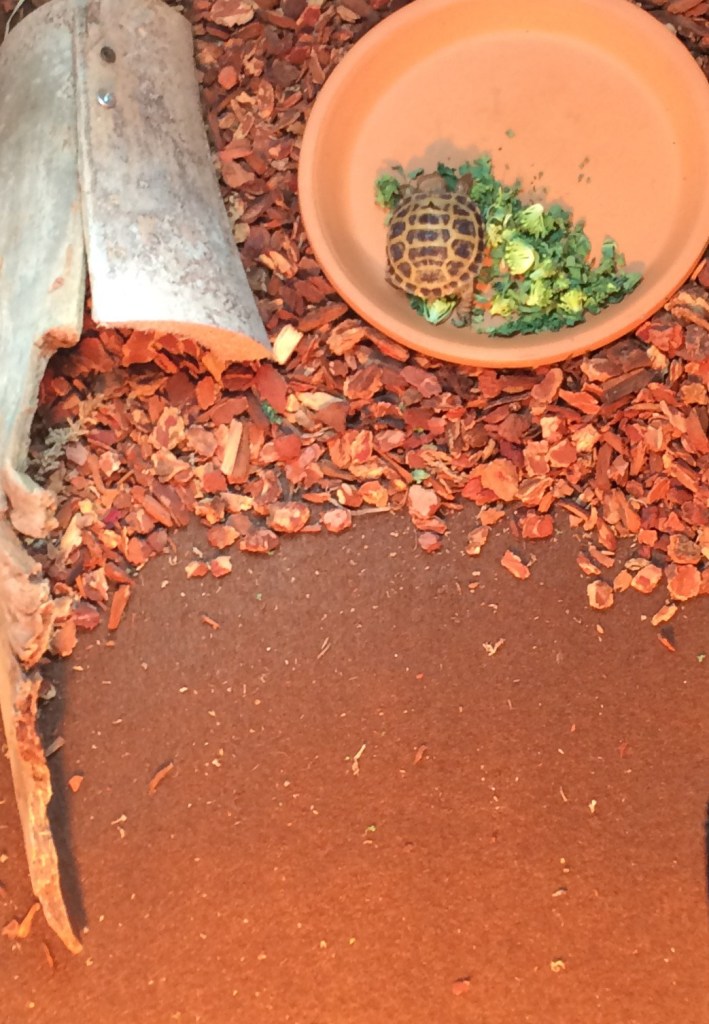
I started with coir fiber a.k.a coconut husk hair. Between the videos and reading material I researched, it sounded great. I don’t recall the brand, but I bought it at a pet store and the cost was around $8 for several bricks. The bricks were tough until you added water and voilà, like magic, a huge amount of stringy substrate was made. You can add organic potting soil to this as well to help maintain moisture. This is my least favorite stuff. Messy and loose, it holds smells of urate (pasty type of urine) and poo. My biggest issue – consumption. More than once, I had to pull long fibers out of mouths and rears; proper term for rear “cloaca”. It took 2 weeks to flush out the coir fiber from these two pictured hatchlings!

No, my torts never eat directly from substrate, but they can inadvertently eat this stuff. No thanks – I like my torts and they are an investment. No need for digestive issues.
Next came dark brown pine bark nuggets. On the cheap, purchased from Lowe’s, a 2 cu-ft bag for $3.33 would fill each of my tort indoor enclosures. Yes! I thought I struck gold! Super cost-effective substrate! Nope, I thought wrong. The nuggets were just too big and made burrowing visibly uncomfortable both indoors and out. Further, my hatchlings had a hard time walking around and it was not easy to “spot” clean, (removing soiled pieces). I also used brown reptile carpet, Eco Carpet by Zoo Med for my first hatchling. Yuck, I had to clean it a lot as it’s a piece of rough felt. Lost a few bucks there (approx. $6).
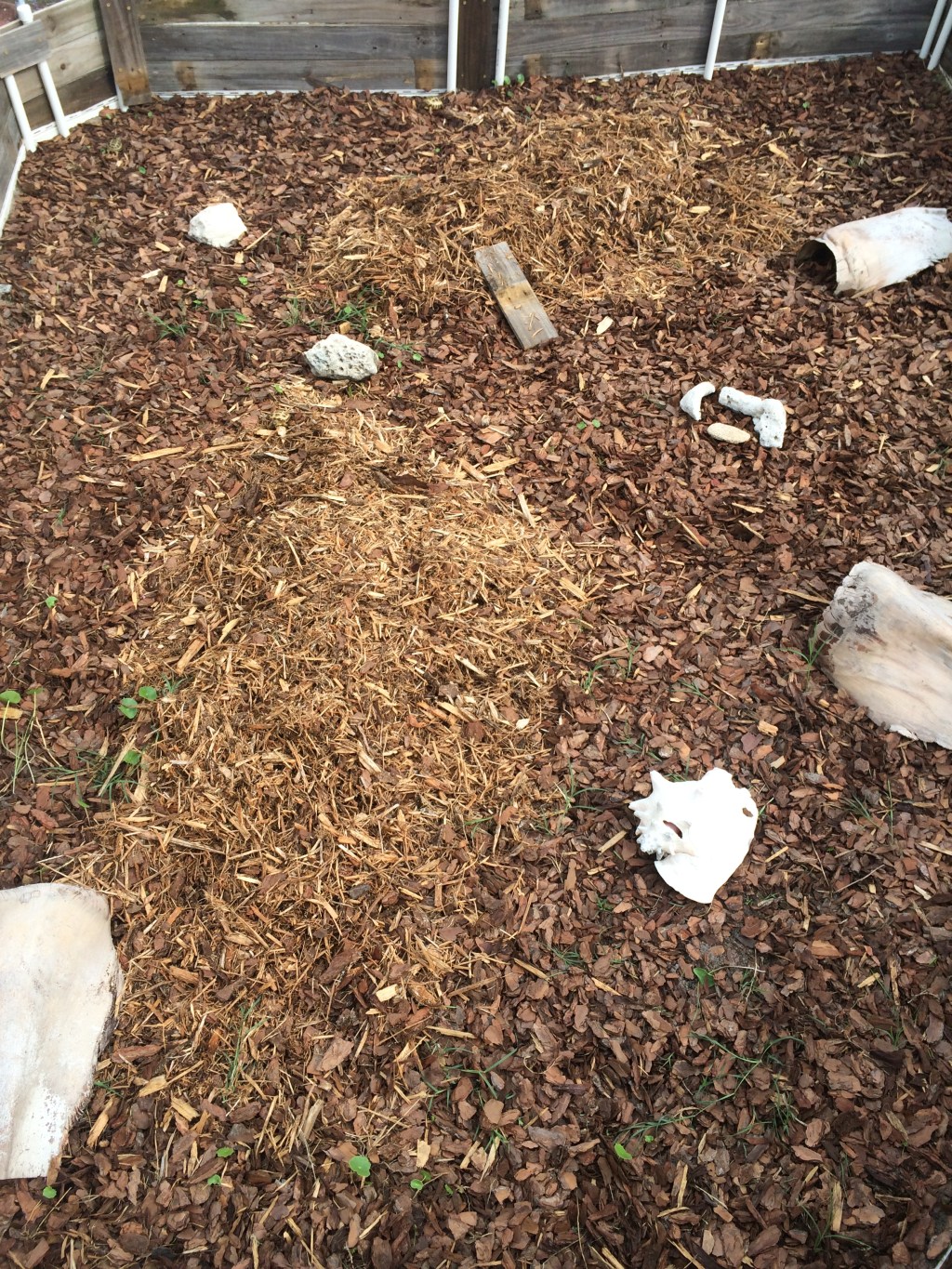
For some reason, I expected shredded pine mulch to be different. Again, thinking on the cheap, these blonde colored strips were often sharp and it was also not easy to spot clean. For added fun (said sarcastically)…as seen in the outdoor pen pic, this shredded mulch got moldy outside and I had to rake it up and use it elsewhere in the yard.
Zoo Med Repti Bark became my immediate solution. The Fir bark chips are small and dry. It says you can clean and reuse the bark, but I never did. I found the cheapest price through PetMountain.com ordering 72 quarts, (approx $50). This is my second best choice of substrate. Although it says it’s dust free, I found it to be dusty. Each bag would be rinsed using a reptile mesh tank lid as my sieve. Then I would spread out the chips onto a clean tarp in the driveway and leave it to dry. Since these enclosures are in the living room, they have to be clean. Though easy to spot clean daily, the smells would still kick up within a few days.

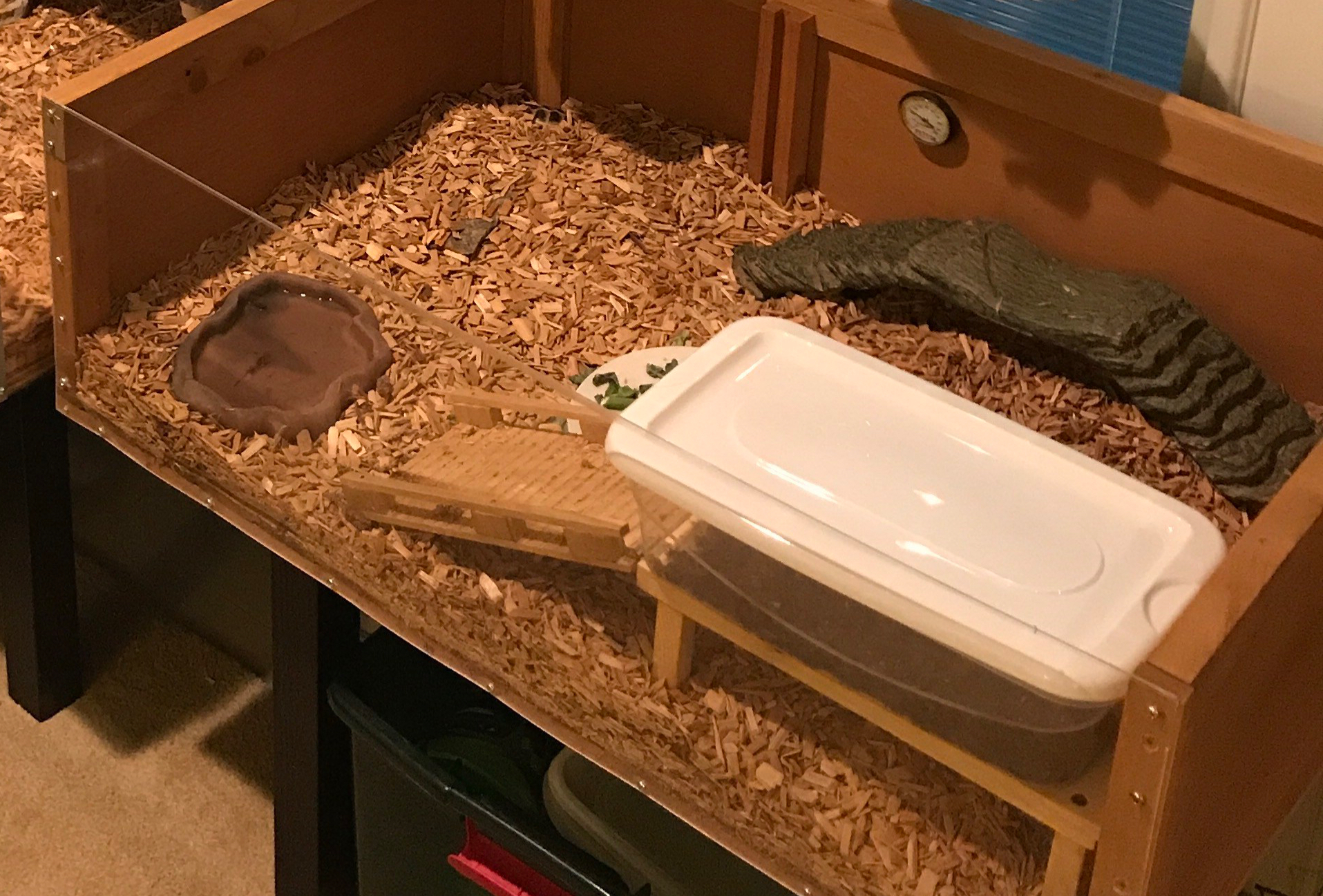
My first choice in substrates right now is using playground Cypress mulch chips both indoors and outside. These blonde chips are not sharp, hold the right amount of moisture without mold, easy to spot clean, and do not hold smells. The cost is significantly cheaper than Repti Bark and it’s dust free (no added work). We keep the mulch in 5 gal buckets at less than $5.00 per bucket. Yes!
If you have made it this far, please visit a more recent post regarding substrates, called Best Tortoise Substrates.
Happy tortoise keeping!
 The Tortoise Keeper