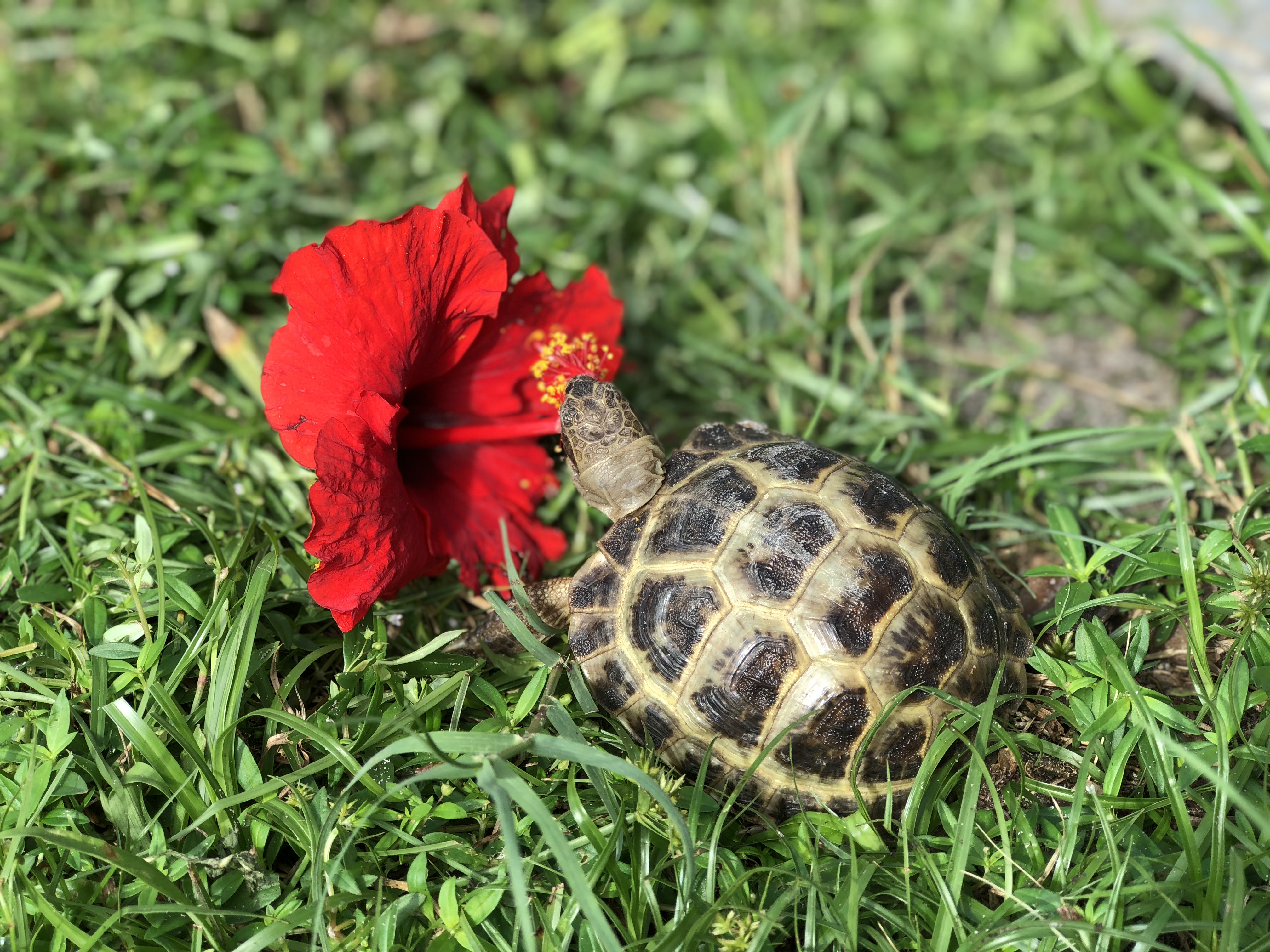
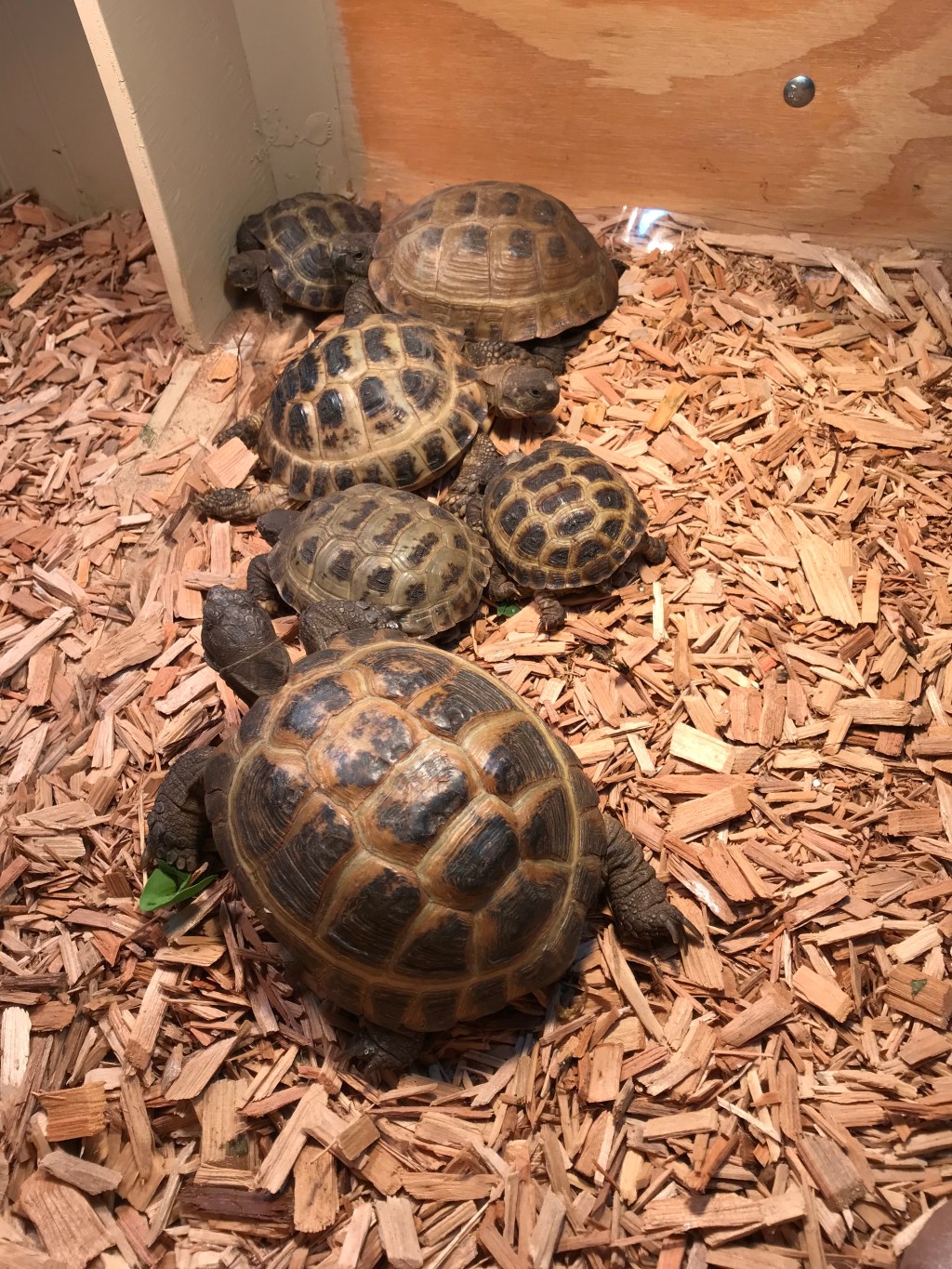

One of my absolute favorite tortoises is the Russian tortoise! There is so much I can share about them. For the sake of time, here are just a few high points…
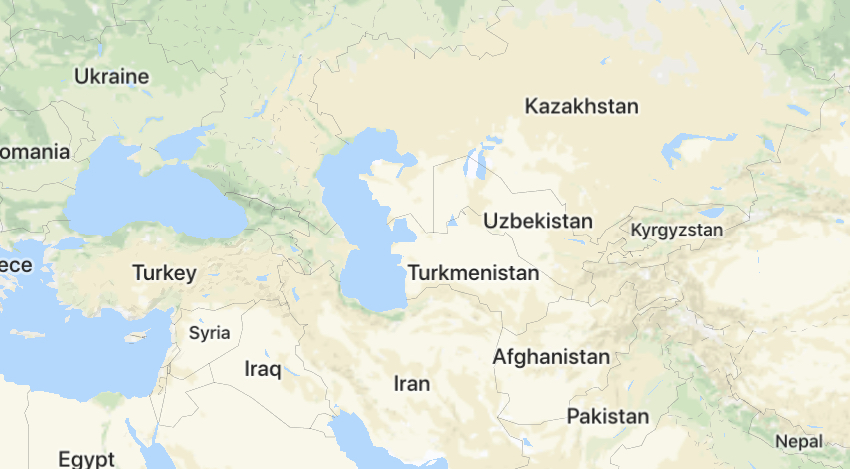
The Russian tortoise, scientifically named agrionemys horsfieldii, “agrionemys” meaning of the Central Asian tortoise species and “horsefieldii” refers to the scientific name after Thomas Horsefield who studied plants and animals in Southeast Asia during the early 19th century. The Russian tortoise is a small, round tortoise found in Central Asia; think Afghanistan, Kazakhstan, Uzbekistan:
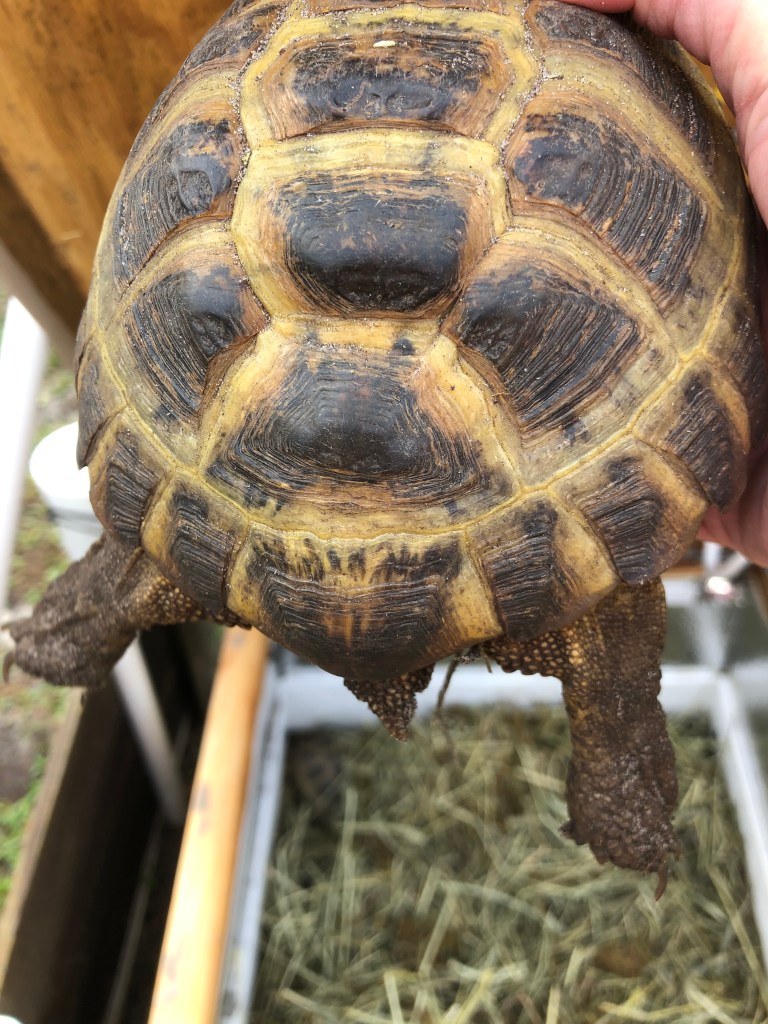
The average adult males grow between 5-8 inches in diameter, while adult females are larger and can grow to 8-10 inches. The male plastron (bottom shell) does not concave as they mature, instead it remains flat just like the female plastron. The gender distinction besides their size is tail length. The male tail is significantly longer and has a little curved nail on the tip. The female tail is like a small triangle, while the male tail is long and wraps under the carapace (top shell).

They come from a climate where summers are hot (over 100 degrees F) and temps fall well below zero in the winter. Russians, “RTs” for short, are burrowers and they hibernate in the winter. Hibernation is not a requirement for their healthy life-cycle as captive pets. They can reproduce without hibernating, I had 2 that prove the theory, (Carson and Ollie). I have read repeatedly that RTs do not live well with each other in a “creep” or group. I disagree all day long.
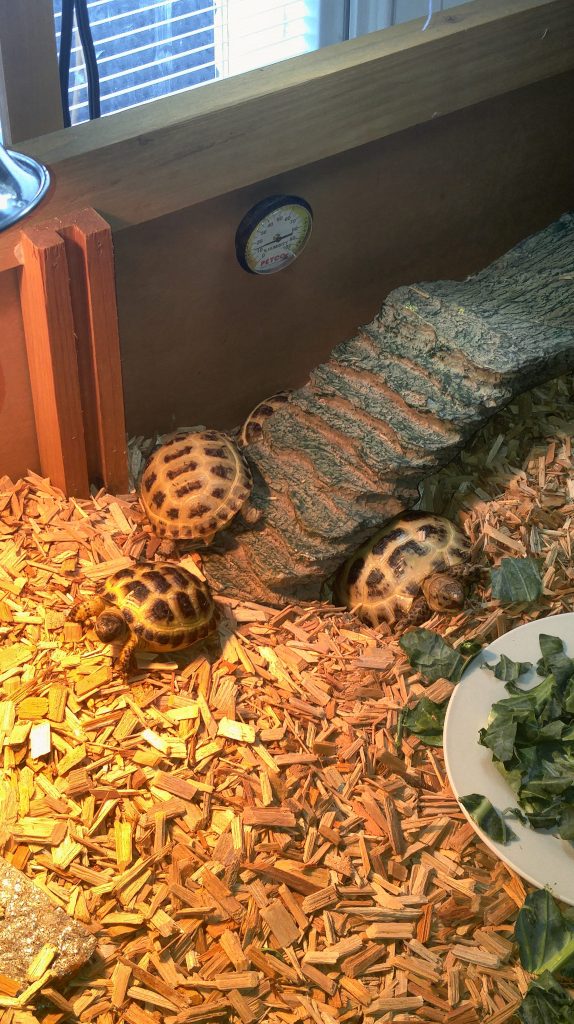
I’ve seen improved health and increased activity after joining a few together (this goes for all the species I keep). As long as there is enough space for them to roam and forage, enough places to hide, and space to burrow they can live socially together. The key is to keep an eye on your tortoises’ activity. Remember, size counts. I recommend grouping similar sized torts together. Seen here are 4 that were all about 1 year old and similar in size. This helps to prevent any aggression and stress.
In some cases, separation may be necessary. I haven’t found this yet with my RTs, but I have had to separate my Redfoots and Hermanns temporarily – a blog topic for another day. Maintaining a proper ratio of male : female is necessary. RTs are best in groups with more females than males. My current community of RT’s is 5 (RIP Ollie).
Their disposition is usually friendly and active. Each RT has their own personality and I love them equally, of course. However, both females and males can become aggressive during mating season, (usually follows hibernation, aka springtime). They are diurnal (awake during the day) and like most torts, they like routine – they know when it’s feeding time! Their diet is a mix of greens and weeds, no fruit.
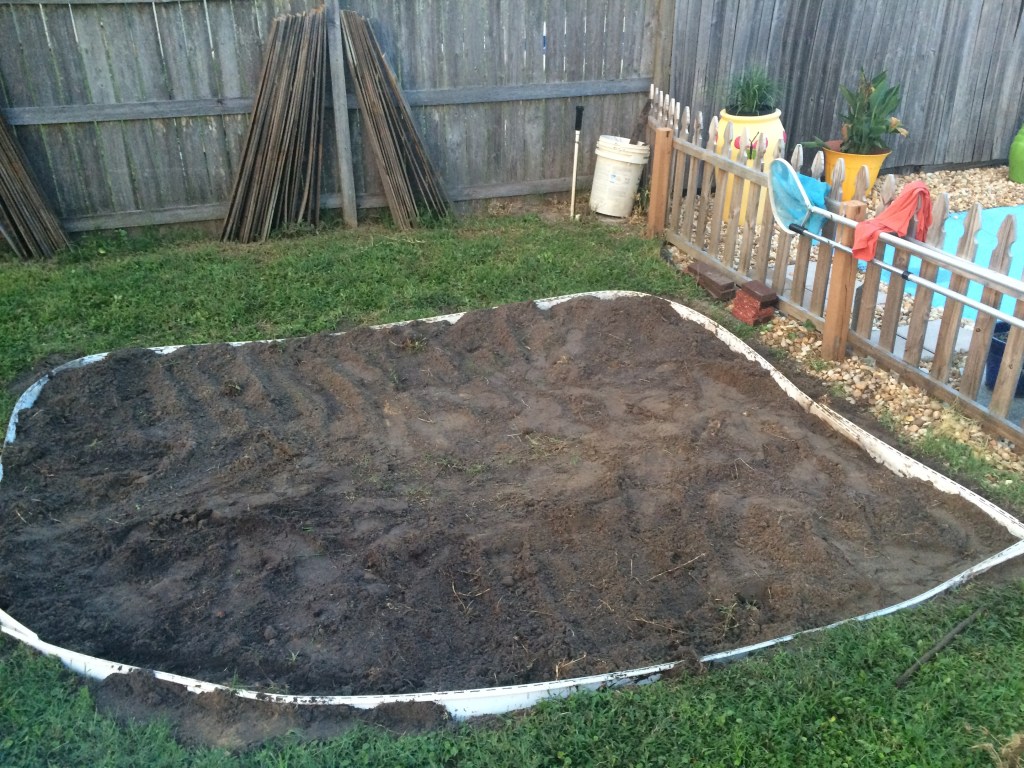
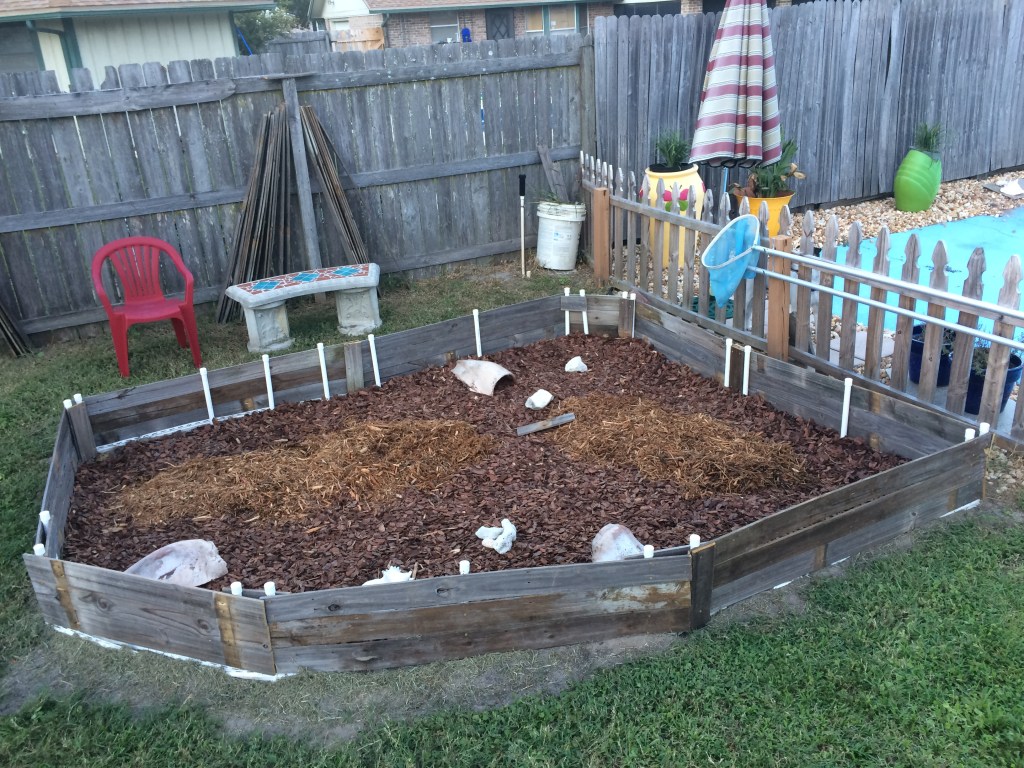
These torts are diggers and climbers. To avoid escape, they need to have at least a 12-18 inch barrier below ground and about an 18 inch high wall. Here is a pic of the 12 inch vinyl siding used as a below ground barrier during the initial construction of the RT pen. The walls of the pen are recycled fence boards that stand 18 inches tall. The pen totals roughly 160 sq ft and the setup has metamorphosized several times.
RT’s are popular due to their small manageable size and price, and are often found in pet stores. I do not believe in taking tortoises from the wild to sell which is often the case in the pet trade. However, I will always encourage getting those animals out of the fish tank they are living in at the local chain pet shop! My personal preference is to rescue when possible and buy from a local breeder.
Happy Tortoise Keeping!
 The Tortoise Keeper