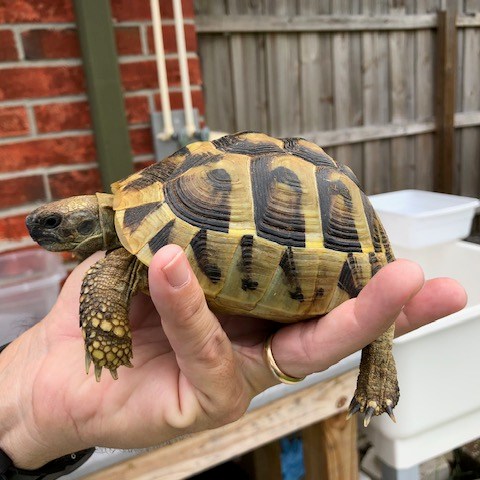
To Buy or Not to Buy a Tortoise
Searching for torts and turtles that are for sale in my area is one of my favorite things to do. There are plenty of breeders who sell on Craigslist, and lots of folks who are just ready to re-home their pet. I have successfully purchased torts from online stores and had them shipped to my house. This requires you to be home at a specific time to sign for the boxed pet or risk losing your health guarantee provided by the seller.
Many of the tortoises and turtles I started with are “rescues,” meaning neglected in some way, so I am willing to take on the good, bad, and downright ugly. It is mostly lack of information and education that leads to improper care. Perfect example, keeping tortoises in a fish tank. Aquariums are designed for holding water and do not allow for good air circulation. They are not large enough for even a small tortoise long term. Torts need to stretch their legs, too! ha
When I am looking for a new species or adding to an existing community, I always do research first. Will this animal thrive in my climate, humidity, and landscape? How large will it grow and do I have room? What is their diet?
Ideally, I like to stick with torts with similar diets so I can buy food in bulk. Do they dig or climb? I need to know this for their particular outdoor pen.
In no particular order, my search begins with these 3 things… Pics, Price, and Health.
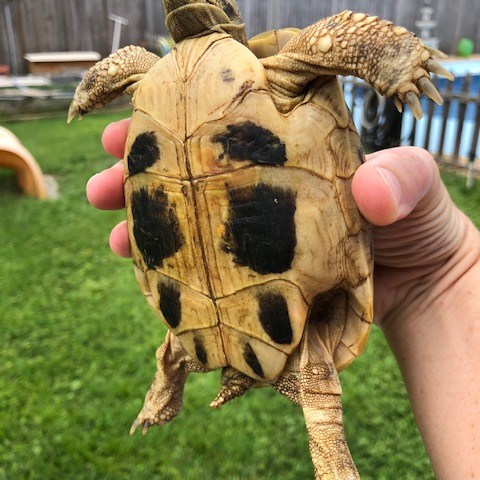
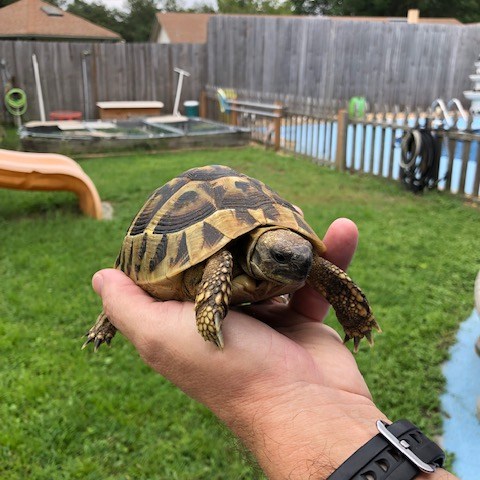
- Pictures: Good, clear pics of the front, rear, top, and bottom. I have seen ads that read “female tortoise,” then I see the tail. Um no, congratulations you have a boy! 🙂
- Price: I compare prices from multiple websites to determine a price point. For example, by Googling where to buy Hermanns tortoises, a list of local and online stores will pop up. This can help gauge the cost.
- Health: This can be tough and risky. That said, I can only take on what I can afford to care for in time, space, and money. **If I am adding to an existing “creep” or group of tortoises, I need the extra space to quarantine the newbie for sometime before allowing them to join the party – more on quarantining later. Ideally, clear eyes and nostrils, clear breathing (no crackle sounds – sign of respiratory infection), good skin, hard shell, and a good solid weight when held are all positive signs of a healthy animal. Wild caught torts can show shell wear. Others may have additional scutes due to abnormal incubation. Some may have pyramiding due to a number of negative captive living factors. For the most part, these are not serious health concerns and are unique to that tortoise. It’s a risk no matter what. A Vet check-up is always a good idea if you have the opportunity.
Ultimately, the goal is to give your pet the best possible existence by starting out with a healthy animal.
Happy tortoise buying…
 The Tortoise Keeper